
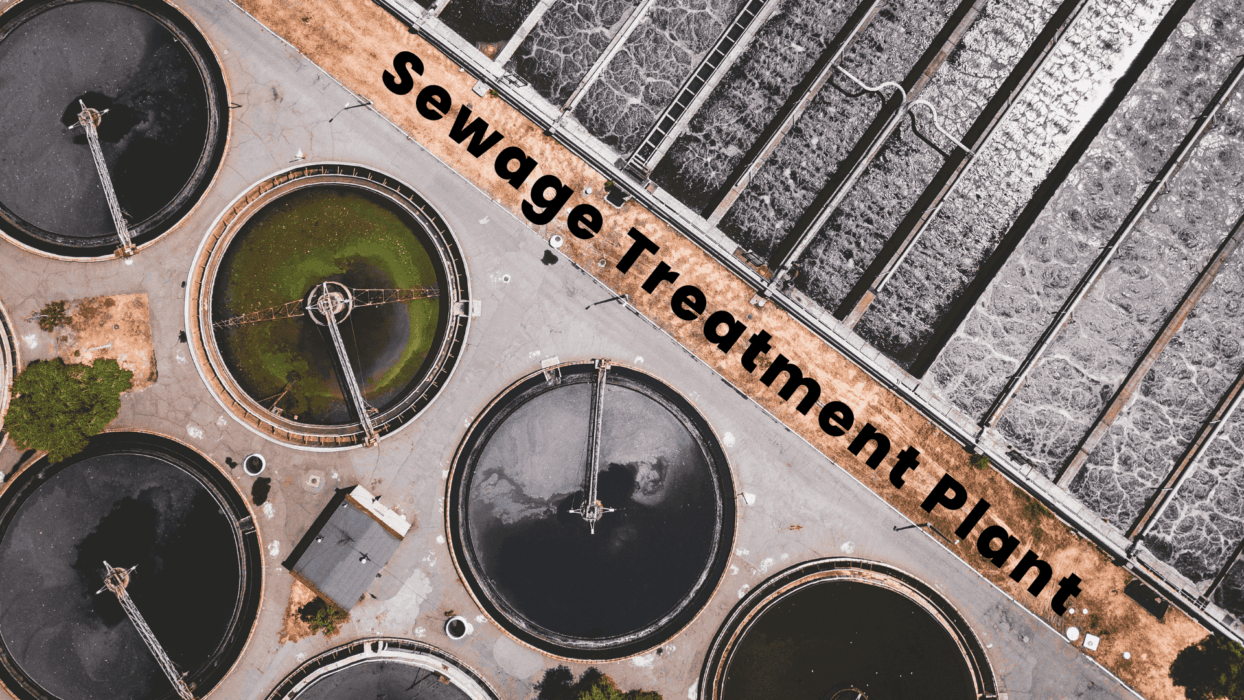
Sewage Treatment Plant
Sewage Treatment Plants (STPs) are crucial facilities that clean wastewater from homes, businesses, and industries before it’s released back into the environment or reused. They mimic and enhance natural processes to remove contaminants through a series of physical, biological, and sometimes chemical stages.
Here’s a breakdown of how STPs typically function:
1. Preliminary Treatment:
- Screening: Raw sewage first passes through large screens or bar racks.3 These remove large objects like rags, plastics, debris, and other solid materials that could damage pumps and equipment in later stages.
- Grit Removal: The screened wastewater then flows into grit chambers.5 Here, the flow is slowed down, allowing heavier inorganic materials like sand, gravel, and grit to settle to the bottom by gravity. This prevents abrasion and wear on downstream machinery.
- Flow Equalization (Optional): Some plants include basins to regulate the flow of sewage, preventing sudden surges during peak periods and ensuring a more consistent treatment process.
2. Primary Treatment:
- Primary Sedimentation: The wastewater enters large settling tanks, also known as clarifiers. In these tanks, the water moves very slowly, allowing lighter solids (organic matter) to settle to the bottom, forming what’s called “primary sludge.” Lighter materials like oils and grease float to the surface as “scum.”
- Sludge and Scum Removal: Mechanical scrapers or other systems collect the primary sludge from the bottom and skim the scum from the surface. These are then transferred for further sludge treatment. This stage typically removes about 50-70% of suspended solids.
3. Secondary Treatment (Biological Treatment):
- This is the core biological stage where dissolved and suspended organic matter is removed. It relies on microorganisms to break down pollutants.
- Aeration/Activated Sludge Process: The wastewater from primary treatment is pumped into aeration tanks. Air is vigorously bubbled through the water, providing oxygen for beneficial aerobic bacteria and other microorganisms to thrive. These microorganisms consume the organic pollutants, converting them into harmless byproducts like carbon dioxide, water, and more microbial mass (activated sludge).
- Secondary Sedimentation: After aeration, the mixture flows into secondary settling tanks. Here, the “activated sludge” (microorganisms that have consumed the organic matter) settles to the bottom. A portion of this activated sludge is recycled back to the aeration tanks to maintain a healthy microbial population, while the excess is sent for sludge treatment. The clarified water, now much cleaner, flows out from the top. This stage significantly reduces the Biological Oxygen Demand (BOD) of the water.
- Other Secondary Methods: Other biological methods include trickling filters (where wastewater trickles over media with microbial films) and oxidation ponds/lagoons (large, shallow ponds for natural biological treatment).
4. Tertiary Treatment (Advanced Treatment – Optional but Increasingly Common):
- This stage is used to achieve higher water quality for discharge into sensitive environments or for specific reuse applications.
- Filtration: The effluent may pass through filters (e.g., sand filters, membrane filters) to remove any remaining fine suspended solids and improve clarity.
- Disinfection: To eliminate any remaining pathogenic microorganisms, the water is disinfected using methods like chlorine, ultraviolet (UV) light, or ozone.
- Nutrient Removal: In many areas, regulations require the removal of excess nutrients like nitrogen and phosphorus, which can cause algal blooms and other environmental problems in receiving waters. This can involve biological or chemical processes.
- Advanced Oxidation Processes (AOPs): Some STPs employ AOPs to break down persistent organic pollutants and chemicals.
5. Sludge Treatment and Disposal:
- The sludge generated from the primary and secondary treatment stages is a concentrated byproduct that also needs to be treated.
- Thickening: Sludge is often thickened to reduce its volume.
- Digestion: Sludge undergoes anaerobic digestion (in the absence of oxygen) where bacteria break down the organic matter, producing biogas (rich in methane) which can be used as a renewable energy source for the plant. Alternatively, aerobic digestion can be used.
- Dewatering: The digested sludge is then dewatered (e.g., using centrifuges or filter presses) to further reduce its volume, creating a solid “biosolid” cake.
- Disposal/Reuse: The treated biosolids can be disposed of in landfills, incinerated, or, if meeting strict quality standards, used as fertilizer in agriculture.
The ultimate goal of a sewage treatment plant is to produce an effluent that is safe to discharge back into rivers, lakes, or oceans, or to be reused for non-potable purposes like irrigation, industrial processes, or toilet flushing, thereby protecting public health and the environment.